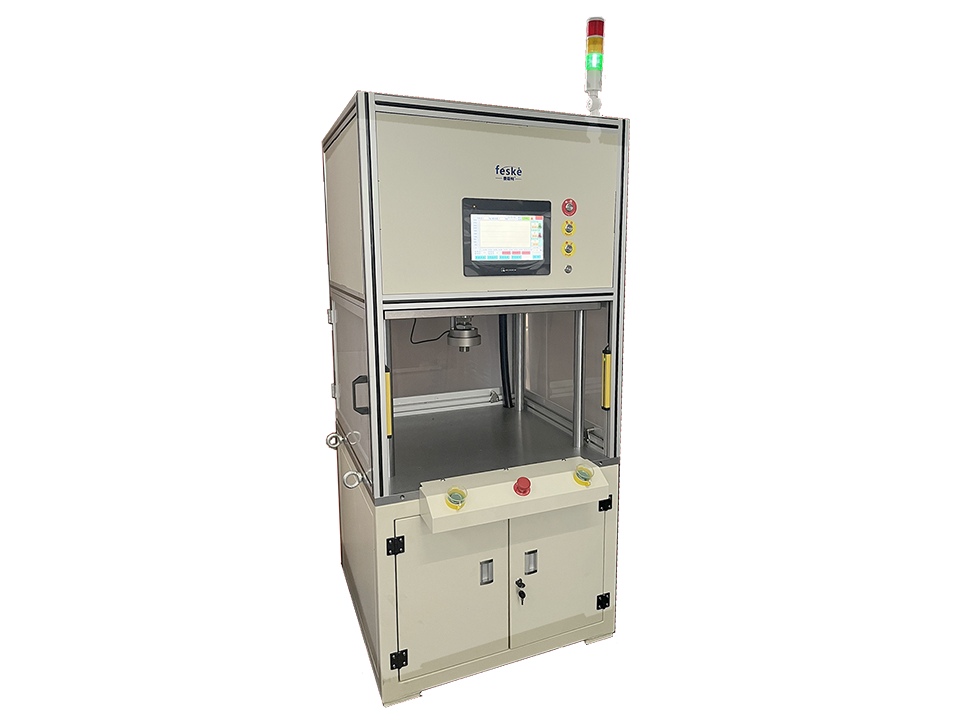
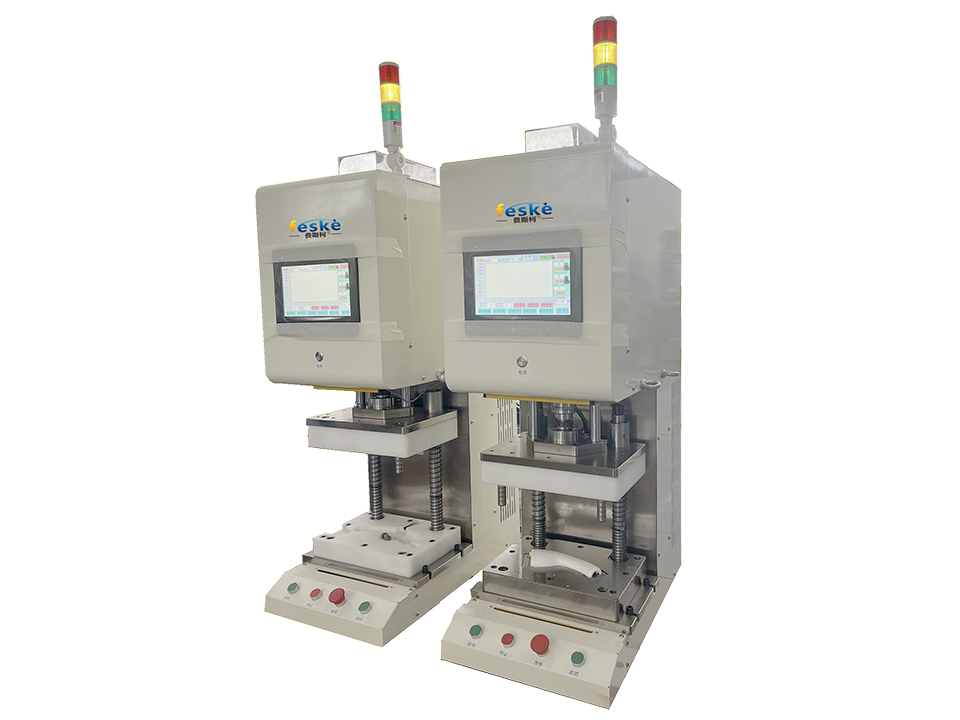

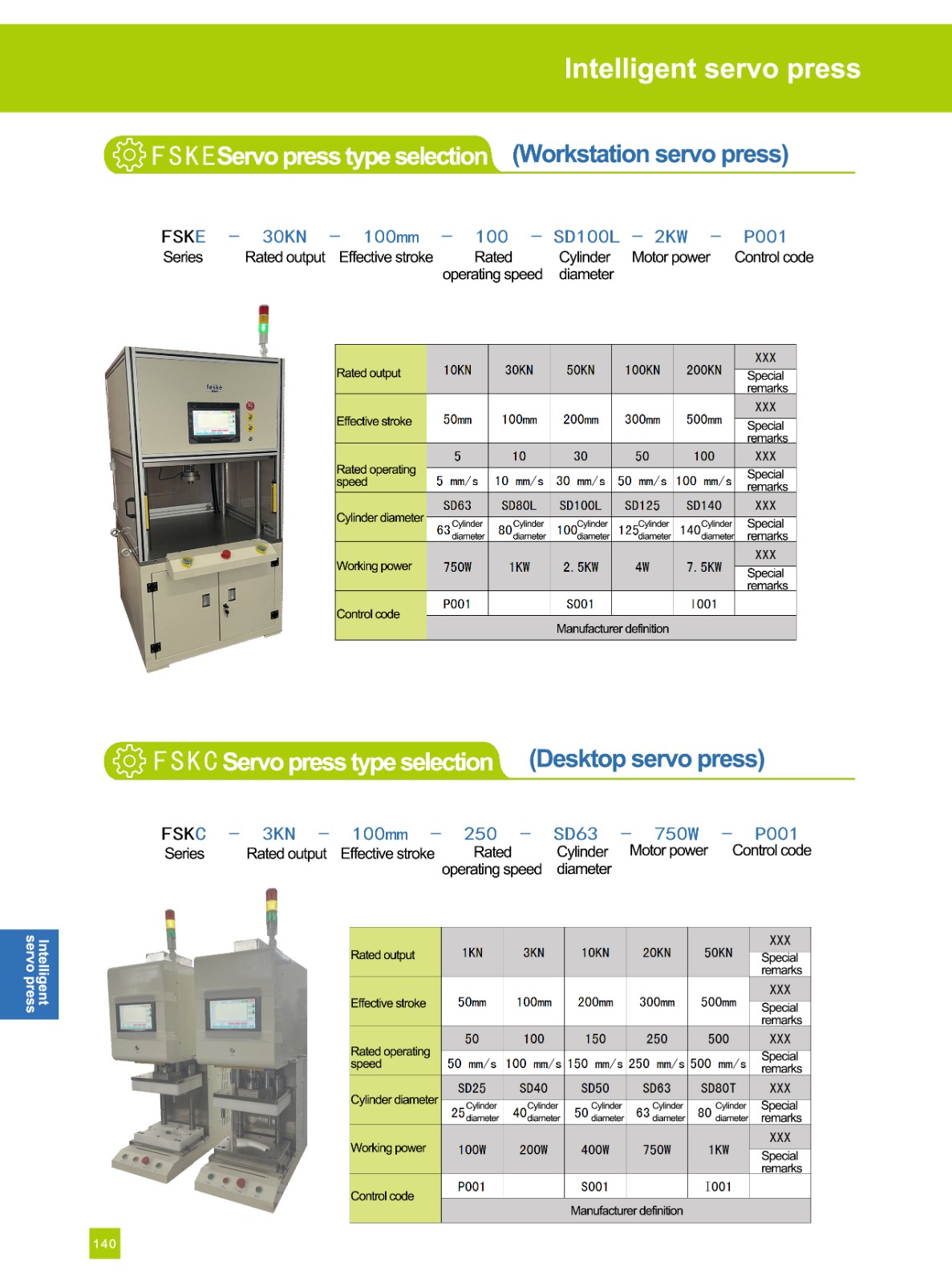
FSKC(Series) — 3KN (Rated output) — 100mm(Effective stroke) — 250(Rated operating speed) — SD63( R cylinder diameter) — 750W (Motor power) — PO01(Control code)
Software functions
PC version
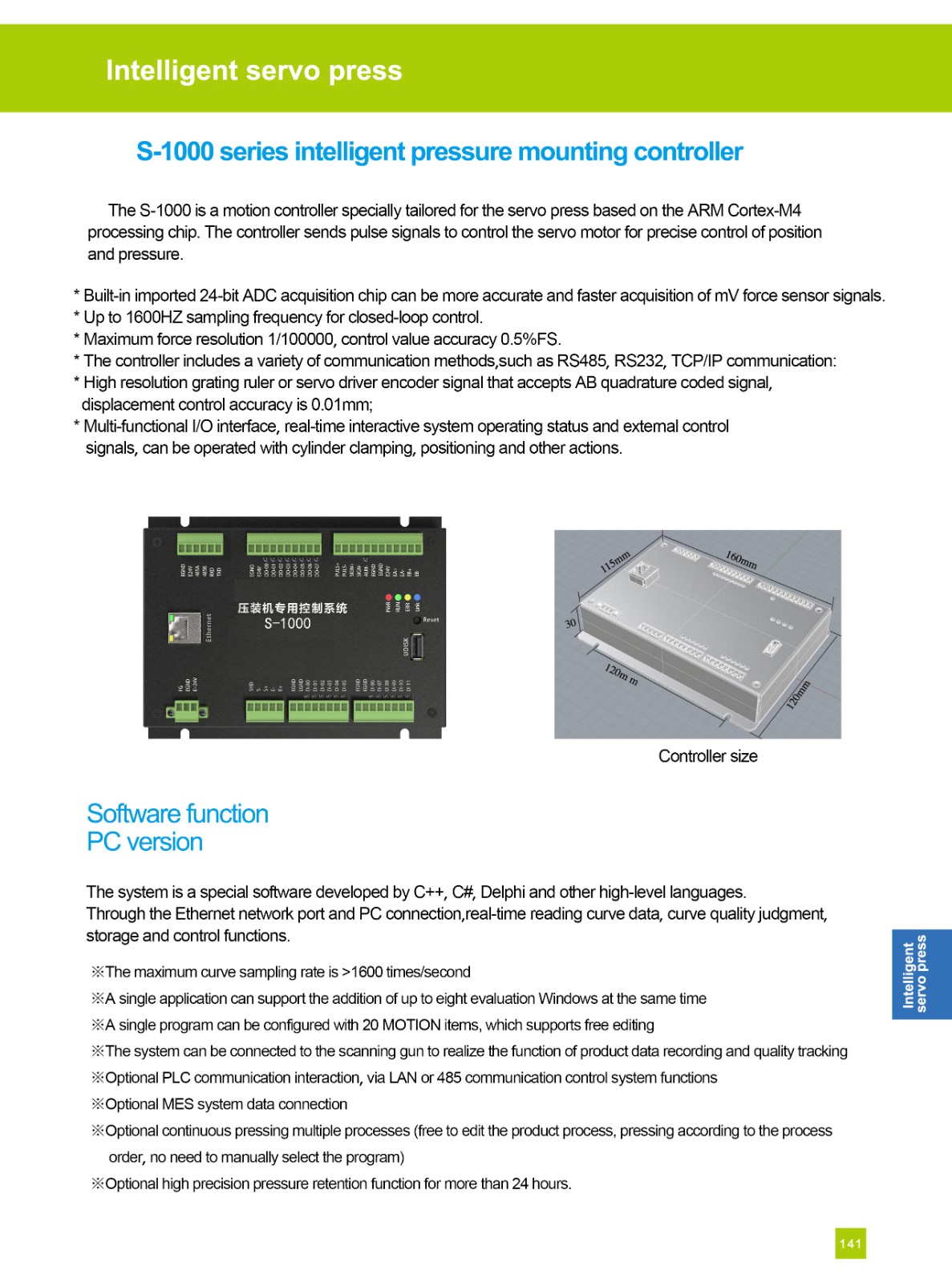
The system is a special software developed by C++, C#, Delphi and other high-level languages
Connect to PC through Ethernet port to read curve data, curve quality judgment, storage and control functions in realtime
The maximum curve sampling rate>1600 times/second:
A single program can support adding 8 evaluation windows at the same time:
A single program can be configured with 20 MOTION items, supporting free editing. The system can be connected to a barcode scanner to realize product data recording and quality tracking functions:
Optional PLC communication interaction, control system function through LAN or 485 communication:
Optional MES system data docking:
Optional continuous pressing of multiple processes (freely edit the product process, press in the process sequence, no need to manually select the program) Optional high-precision pressure holding function for more than 24 hours
Touch screen version
It can realize accurate pressure and position control system with S-1000 controller. The human-machine dialogue window is programmed by configuration software, which can display curves, point quality judgment, and data storage. The system cost is relatively low:
Control accuracy Control force value accuracy 0.5%FS:
Touch screen curve sampling rate>100 times/second:
A single program can configure 20 MOTION items and support free editing:
The controller can control pressure stop/accurate position stop/10 trigger stop/pressure hold at any time
Applicable to all occasions with strict requirements on press-fitting process and force control.
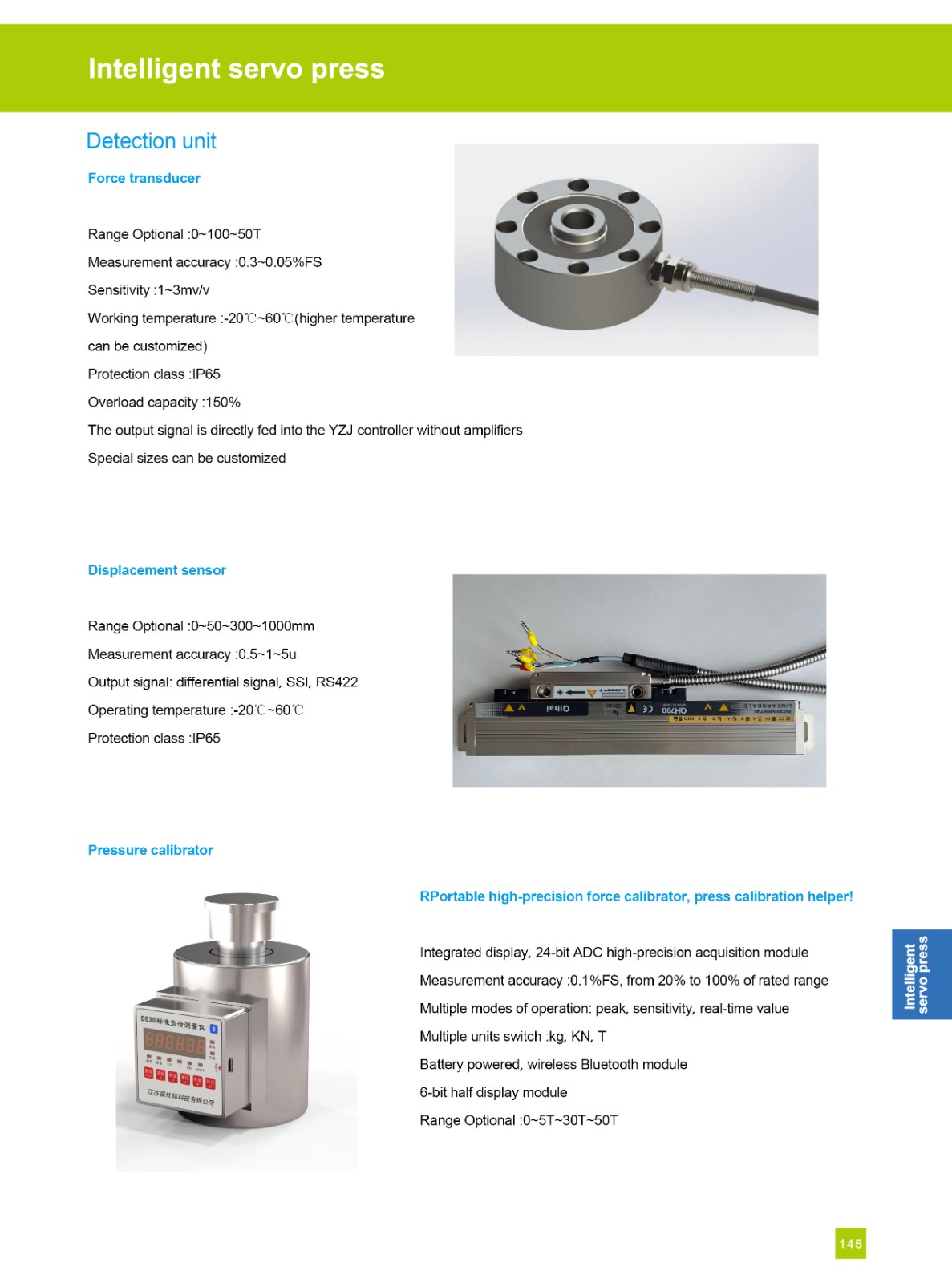
Detection unit
Force sensor
Optional range: 0-100-50T
Measurement accuracy: 0.3-0.05%FS
Sensitivity: 1-3mv/v
Working temperature: -20℃~60℃ (higher temperature can be customized)
Protection level: IP65
Overload capacity: 150%
Output signal directly enters YZJ controller, no amplifier required
Special size can be customized
Displacement sensor
Optional range: 0-50-300-1000mm
Measurement accuracy: 0.5-1-5 u
Output signal: differential signal, SSI, RS422
Working temperature: -20℃~60C
Protection level: IP65
Pressure calibrator
Portable high-precision force calibrator, a good helper for press calibration!
Integrated display, 24-bit ADC high-precision acquisition module
Measurement accuracy: 0.1%FS, from rated range 20% to 100%
Multiple operation modes: peak, sensitivity, real-time value
Multiple unit switching: kg, KN, T
Battery powered, wireless Bluetooth module
6.5-digit digital display module
Optional range: 0~5T~30T~50T
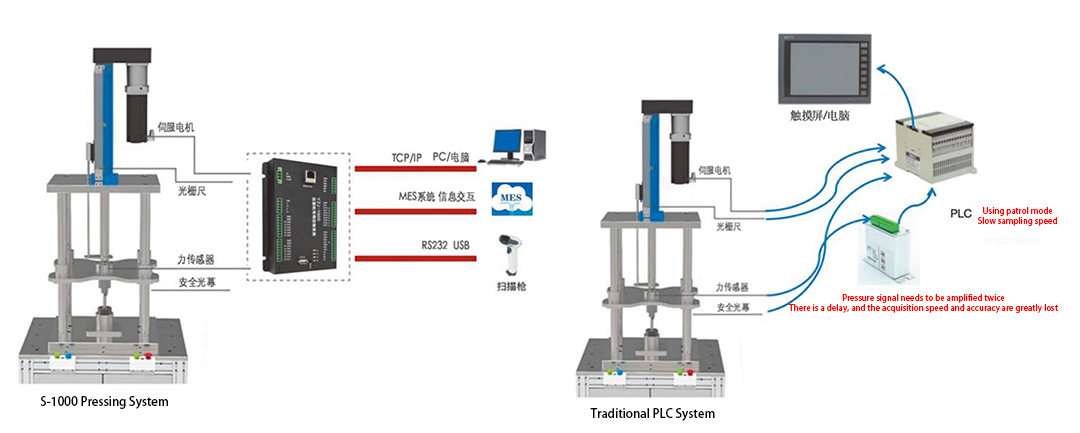
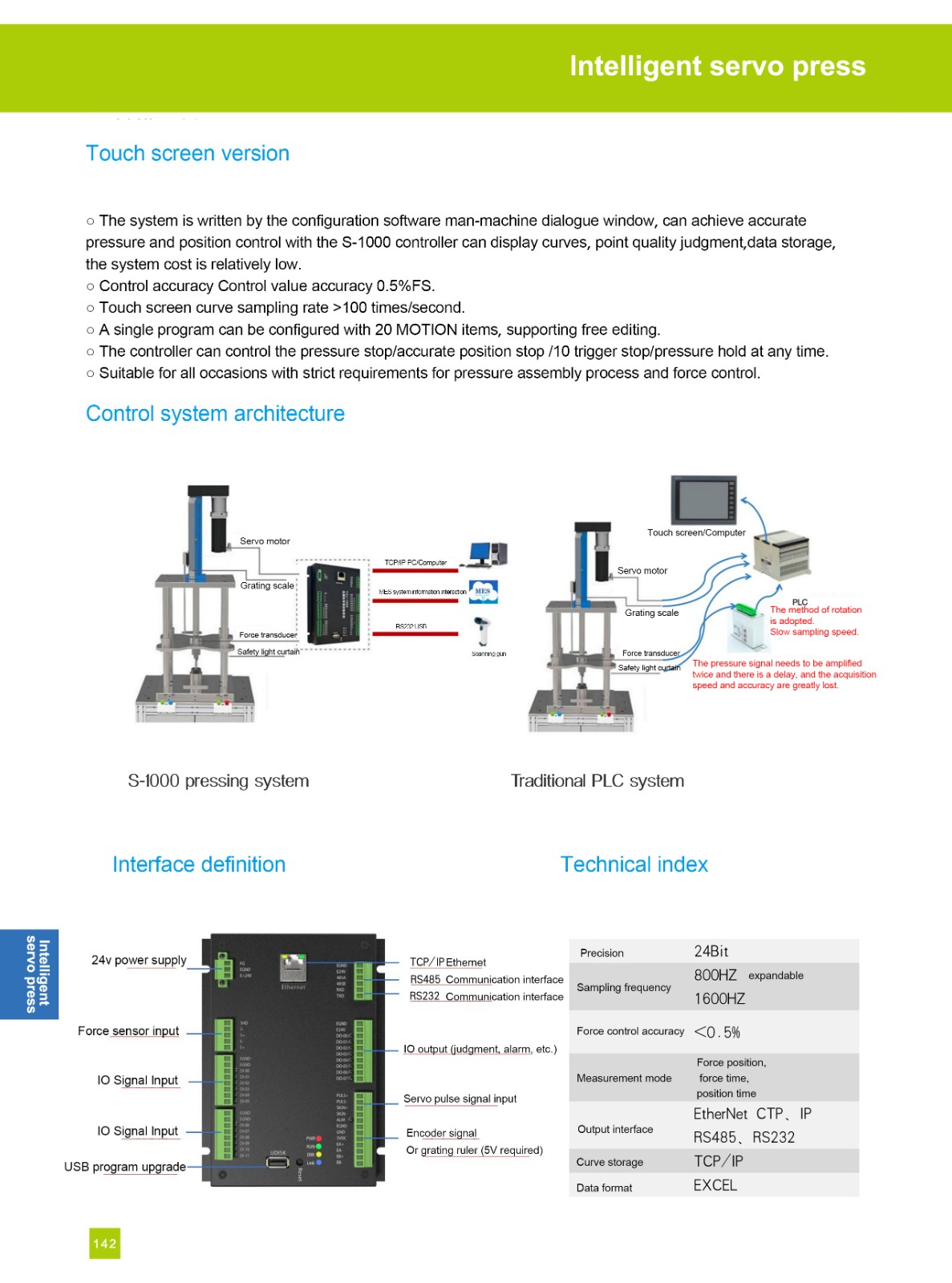
Control system architecture
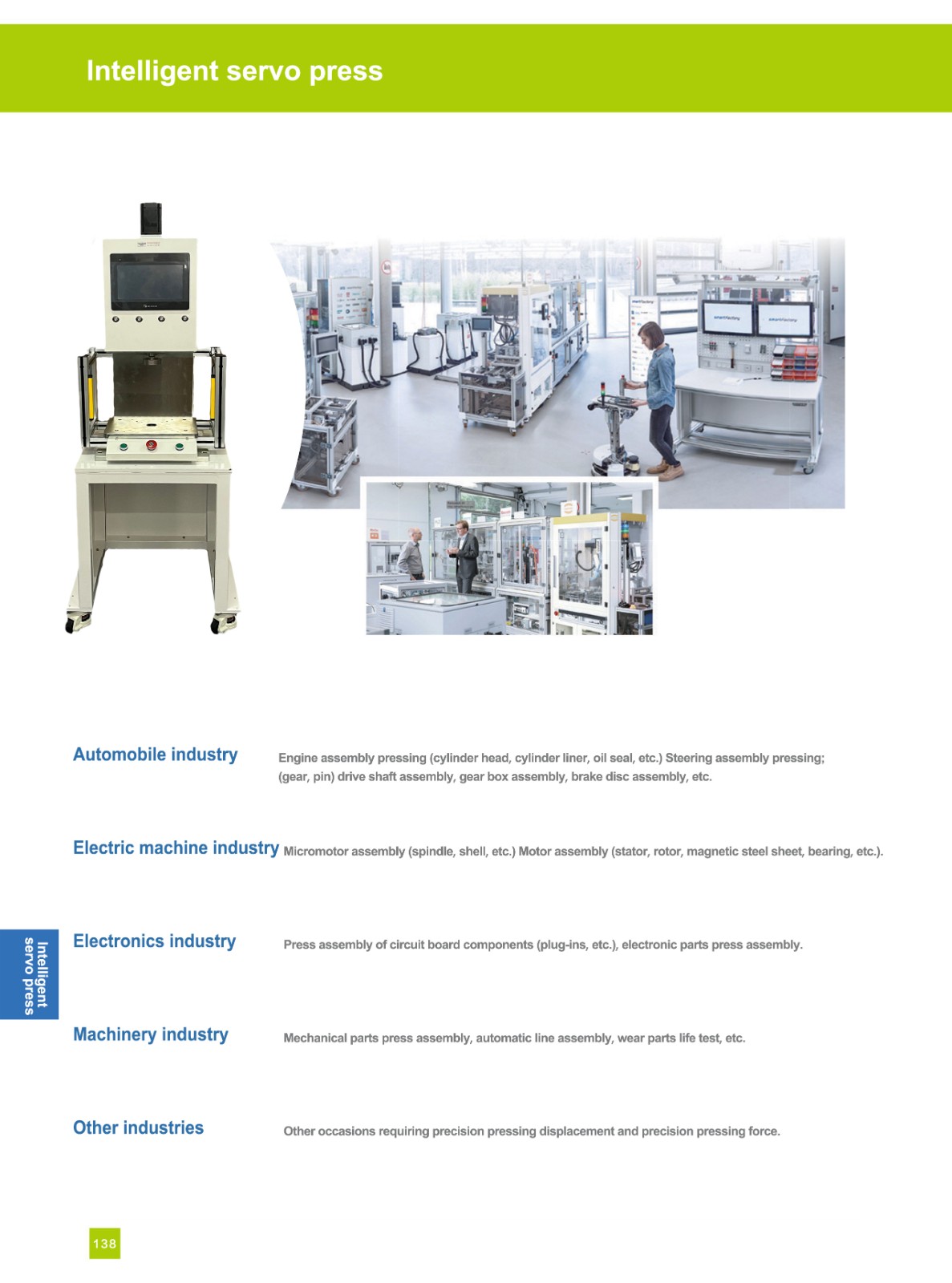
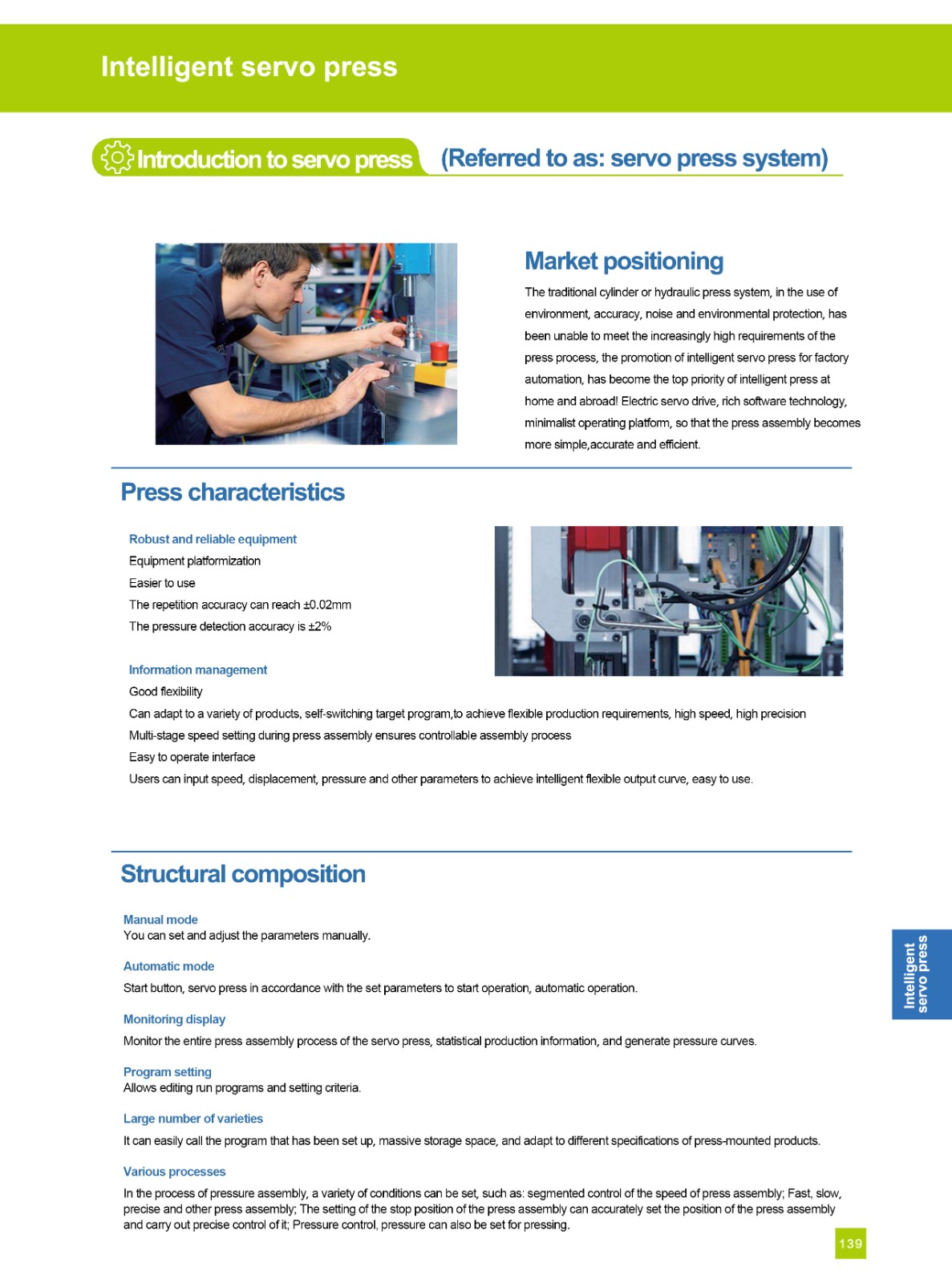
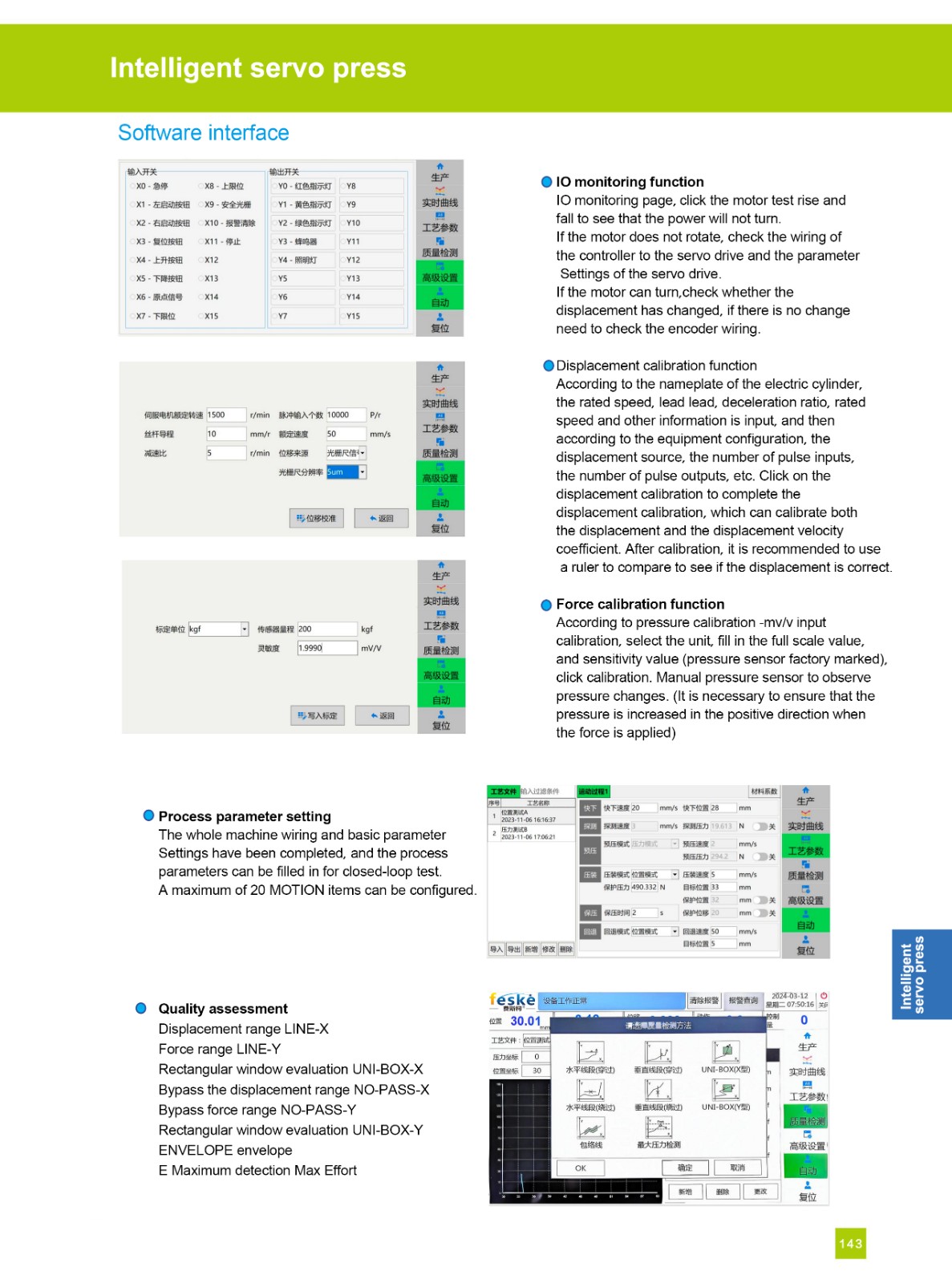
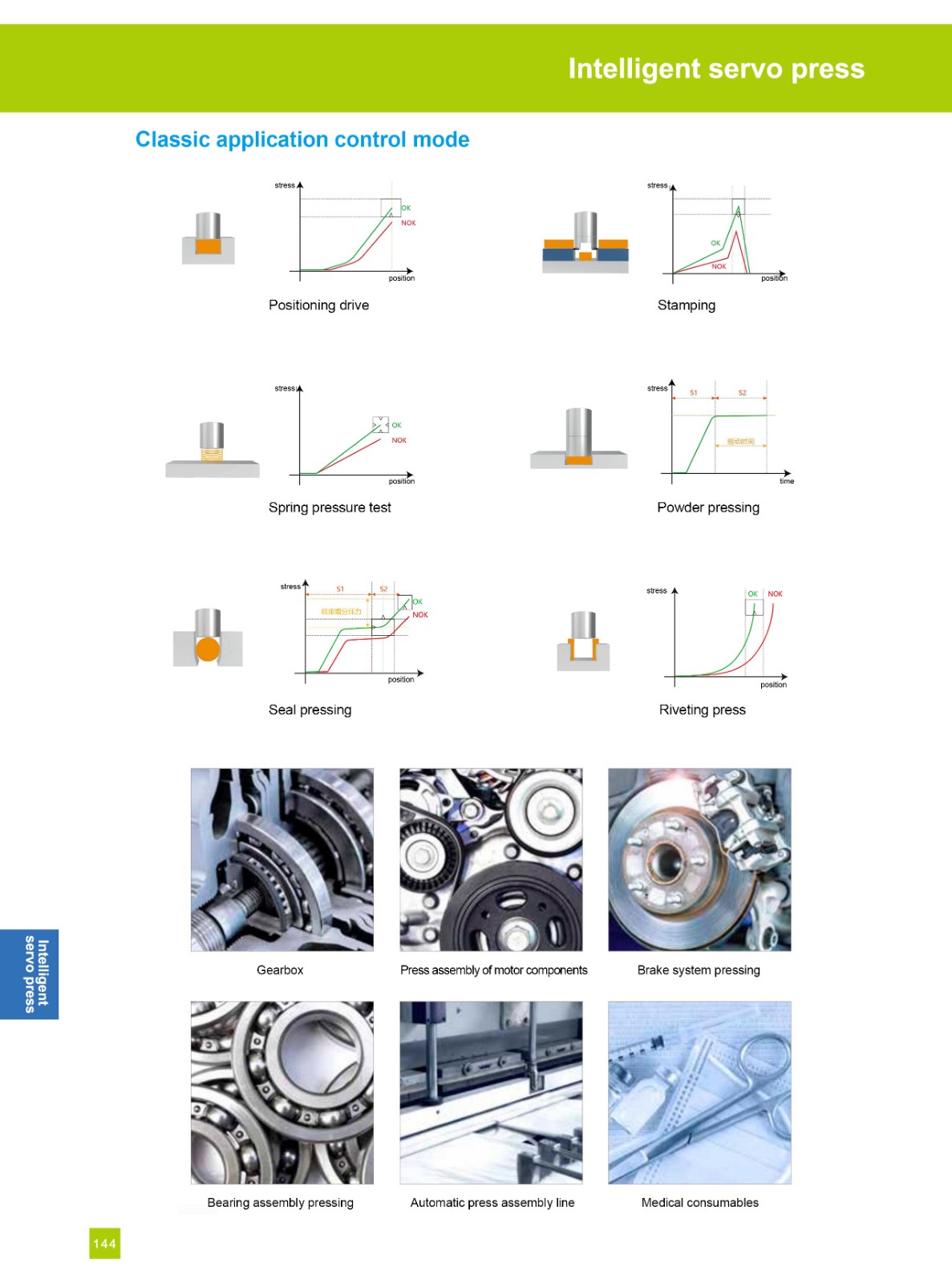
The advantages of servo press machines compared to traditional hydraulic presses are mainly reflected in the following aspects:
1. Environmental Protection: Electric drives significantly reduce carbon emissions and harmful gas emissions, aligning with the trend of green manufacturing. Hydraulic systems can pose a pollution risk due to leaks, while electric designs eliminate the need for hydraulic oil, thus reducing environmental impact.
2. High Efficiency and Energy Saving: The simplified electrical structure improves energy conversion efficiency and reduces energy waste. Intelligent control technologies (such as servo motors) enable precise pressure regulation, thereby improving production accuracy and response speed.
3. Low Maintenance Costs: The electromechanical structure is simpler than hydraulic systems, resulting in a lower failure rate and easier maintenance. Hydraulic systems require regular replacement of hydraulic oil and seals; electric solutions reduce the need for these consumables.
4. Noise Control: Electric drives are quieter at low speeds, improving working comfort.
5. Servo Press Machine Intelligent Integration
Servo Press is compatible with CNC systems (such as Dell DA53/DA58) to enable automated operation and data monitoring, thereby improving productivity.
A column-type servo press is a mechanical device that achieves high-precision pressure assembly through
servo motor drive. It is widely used in precision manufacturing processes in industries such as automotive,
motors, electronics, and home appliances. Its core advantage lies in its ability to perform closed-loop contro
l of pressure, displacement, and speed throughout the pressing process, ensuring stable and reliable assem
bly quality.
Main Types and Structural Features
Column-type servo presses can be classified into the following categories based on the number of columns
and structural form:
Single-column type (C-type): Compact structure, good operational flexibility, suitable for pressing and riveti
ng small workpieces.
Two-column type: More stable than the C-type, suitable for medium-tonnage automated production line
integration.
Four-column type: Four columns provide extremely high rigidity and stability, effectively reducing processi
ng deformation, suitable for scenarios with large tonnage and high-precision requirements.
The equipment mainly consists of the following components:
Servo motor and driver
High-precision ball screw or servo cylinder
Pressure head and worktable
Pressure sensor and displacement sensor
Programmable logic controller (PLC) and touch screen human-machine interface
Four-column servo press: A powerful assistant for precision machining
[Image] [Unique Screening Room]
00:39 Introduction to the overall function of the vertical four-column servo press
[Video for all]
Working Principle: The servo press works by using a servo motor to drive a high-precision ball screw, which
in turn drives the pressure head in a linear reciprocating motion. During the pressing process, the system
collects pressure and displacement data in real time, forming a force-displacement curve to determine
whether the pressing is qualified. For example, when the bearing is pressed into place, the pressure will
suddenly rise. The system uses this to determine the endpoint position and automatically stops, avoiding
overpressure or underpressure.
This closed-loop control method not only improves machining accuracy (up to ±0.01mm) but also supports
data traceability, meeting the requirements of intelligent manufacturing for process monitoring and analysis.
Typical Application Scenarios
Table Industry Application Examples
Automotive Manufacturing Engine cylinder liner, oil seal, brake disc assembly press-fitting
Motor Production Bearing, rotor, spindle press-fitting
3C Electronics Circuit board insertion, micro motor assembly
New Energy Battery module, electronic control unit press-fitting
Selection Recommendations
When selecting a column-type servo press, consider the following factors:
**Tonnage Requirements:** Common specifications range from 0.5T to 50T, determined based on materials
and processes.
**Precision Requirements:** For precision assembly, it is recommended to select products with a repeatabili
ty accuracy ≤ ±0.01mm.
**Automation Compatibility:** Does it support integration with robotic arms and conveyor lines?
Leveraging core advantages such as high precision, high efficiency, energy conservation, and environmental
friendliness, servo presses have emerged as critical equipment in modern precision manufacturing.
Compared to traditional hydraulic or mechanical presses, servo presses utilize servo motor drives and full closed-loop control systems to achieve precise regulation of pressure, speed, and displacement. They demonstrate exceptional performance in enhancing product quality consistency, reducing energy consumption, and boosting production flexibility.
Key advantages are outlined below:
**High Precision and Stable Quality**
Servo presses can achieve a repetitive positioning accuracy of ±0.01 mm and a pressure control accuracy of ±0.25% FS (Full Scale). The entire pressing process is fully monitorable, with force-displacement curves captured in real-time (sampling rate ≥ 1000 times/second). This effectively prevents overshoot and ensures consistent pressing quality for every single product. For instance, actual field tests of Lixing servo presses have demonstrated a displacement repeatability of ±0.01 mm, a force control accuracy of ±1% FS, and an anomaly alarm rate of less than 0.1%.
**Energy-Efficient, High-Efficiency, and Low Operating Costs**
By employing "pump-controlled servo" technology, which supplies energy on demand, these presses achieve energy savings of 30% to 70% compared to traditional hydraulic presses. During idle periods, the motor consumes virtually no power; specifically, servo screw presses save approximately 60% more energy than traditional friction presses. Furthermore, noise levels can be reduced from 85 dB to below 65 dB, thereby significantly improving the working environment.
**Rapid Response and Enhanced Production Cycle Times**
The servo system boasts a response frequency of up to 200 Hz—a performance improvement of several orders of magnitude compared to traditional equipment. Pressing actions are fully programmable and support multi-segment speed control, enabling rapid descent, controlled-speed pressing, and quick return strokes. This results in an overall increase in production cycle speed of over 30%, effectively meeting the demands of high-tempo automated production lines.
**Intelligent Operation and Data Traceability**
These systems support integration with Manufacturing Execution Systems (MES), enabling electronic SOP management, automatic retrieval of process parameters, and comprehensive storage of pressing data (certain models can store up to 10 million records locally). This capability fulfills the Industry 4.0 requirements for production process traceability, facilitating effective quality reviews and process optimization. **Wide-Ranging Applications, Enhanced Flexibility**
Flexibly programmable to adapt to diverse process requirements, this system is widely utilized across sectors such as new energy vehicles (specifically for bearing and motor component press-fitting), electronics
(circuit board component insertion), home appliances, and mechanical assembly. It supports a variety of processes—including press-fitting, riveting, stamping, and testing—thereby truly enabling multi-purpose functionality within a single machine.
The core advantages of servo presses include high precision, energy efficiency, low noise, rapid response times, extensive programmability, and ease of maintenance. Unlike traditional hydraulic presses, they utilize servo motor drives to achieve precise, fully closed-loop control over pressure, speed, and position; consequently, they are widely deployed in demanding manufacturing sectors such as automotive, electronics, and new energy.
Detailed Breakdown of Key Advantages:
1.
High Control Precision
Servo presses achieve pressure control accuracy of ≤ ±0.5% and repetitive positioning accuracy of ±0.001 mm. By generating real-time pressure-displacement curves, they support 100% online quality inspection, allowing product scrap rates to be kept below 0.5%.
2.
Significant Energy Savings
Employing "pump-controlled servo" technology, these machines supply energy on demand, resulting in extremely low power consumption during idle periods. Compared to traditional hydraulic presses, they offer energy savings of 30%–70%, with energy conversion efficiencies exceeding 90%.
3.
Quiet Operation; Improved Work Environment
Noise levels are reduced by 5 dB to 10 dB compared to traditional equipment; for certain models, operating noise remains below 75 dB, thereby enhancing comfort and working conditions within the workshop.
4.
Rapid Response and High Production Efficiency
Servo motors enable rapid start-up, stopping, and reversal capabilities, allowing for operating cycles of 10–15 strokes per minute. This makes them ideally suited for integration into high-speed automated production lines.
5.
Eco-Friendly and Pollution-Free
By eliminating traditional hydraulic oil systems, these presses mitigate the risk of fluid leakage and prevent oil-related contamination, thereby complying with green manufacturing standards and "Dual Carbon" policy requirements.
6.
High Flexibility; Supports Complex Process Programming
Users can freely configure pressing curves—including stepped pressure profiles and pressure-holding segments—to accommodate a wide variety of process requirements. This high degree of equipment versatility helps reduce the costs associated with replacing machinery on production lines.
7.
Low Maintenance Costs
Thanks to a simplified structural design that eliminates wear-prone components (such as proportional valves), the average mean time between failures (MTBF) exceeds 8,000 hours. Consequently, maintenance costs are reduced to just one-third of those associated with traditional equipment.
The accuracy of the slide module directly affects the quality of the product.
Using multi-axis electric cylinders reduces labor costs
Widely used in laser welding, laser cutting, glue coating machines, spraying machines, punching machines, dispensing machines, small CNC machine tools, engraving and milling machines, plotters, cutting machines and other conveyors, sorting equipment, applicable testing equipment, educational equipment, etc.
Establish standardized network marketing services and mature technical service management systems around the world to provide dealers and users with high-quality pre-sales, in-sales and after-sales services. During the warranty period, provide users with fast, timely and efficient free maintenance services; outside the warranty period, users will still receive our enthusiastic and thoughtful paid technical services. We always pursue "zero defects in products and 100% customer service satisfaction".