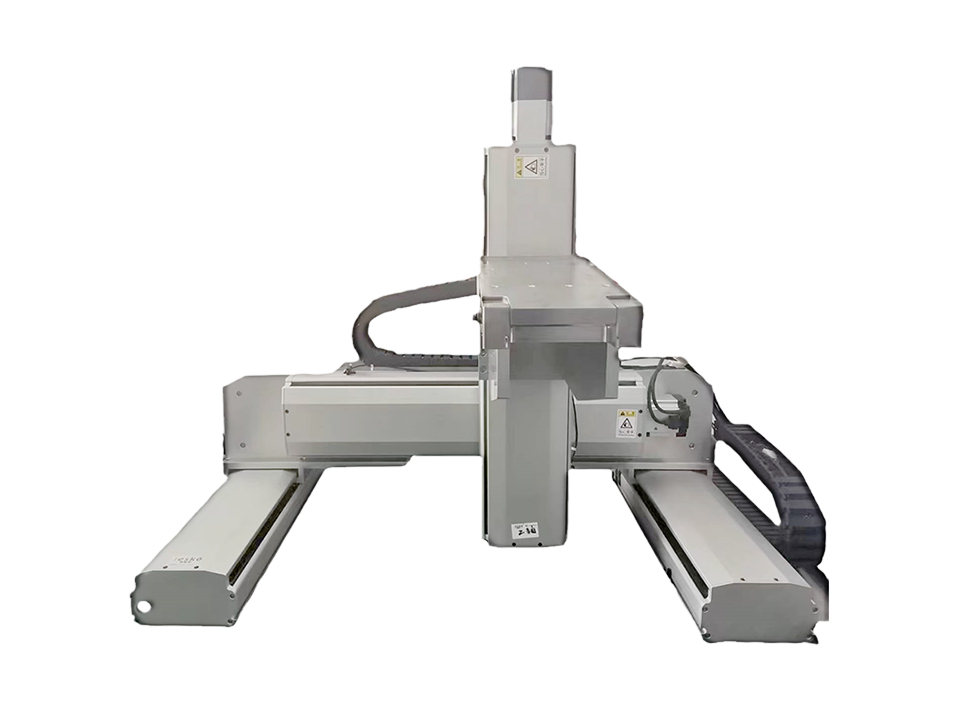
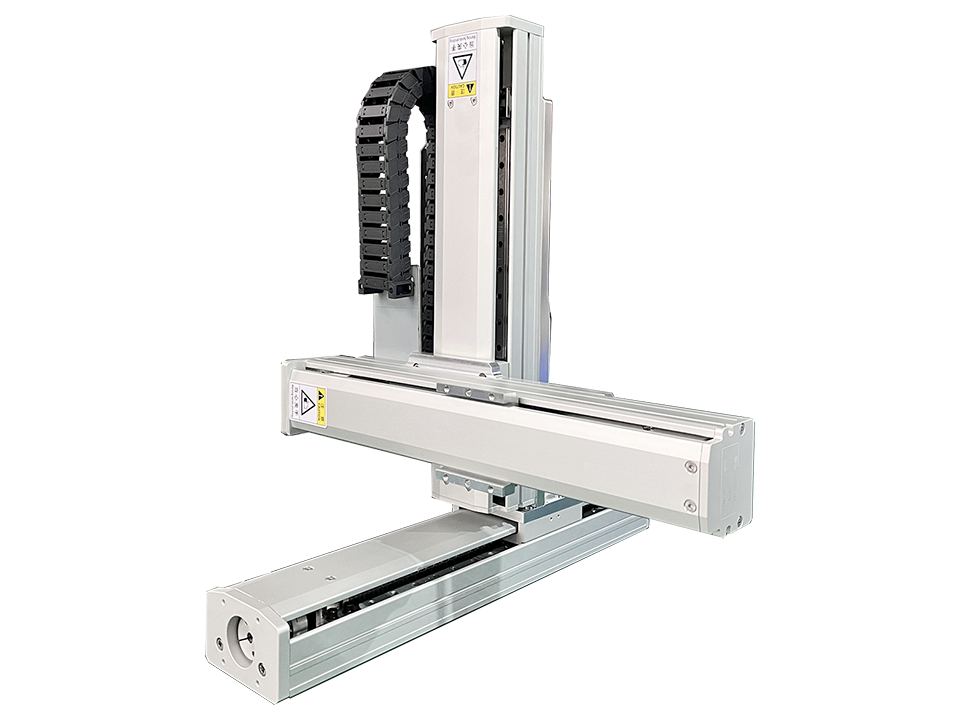
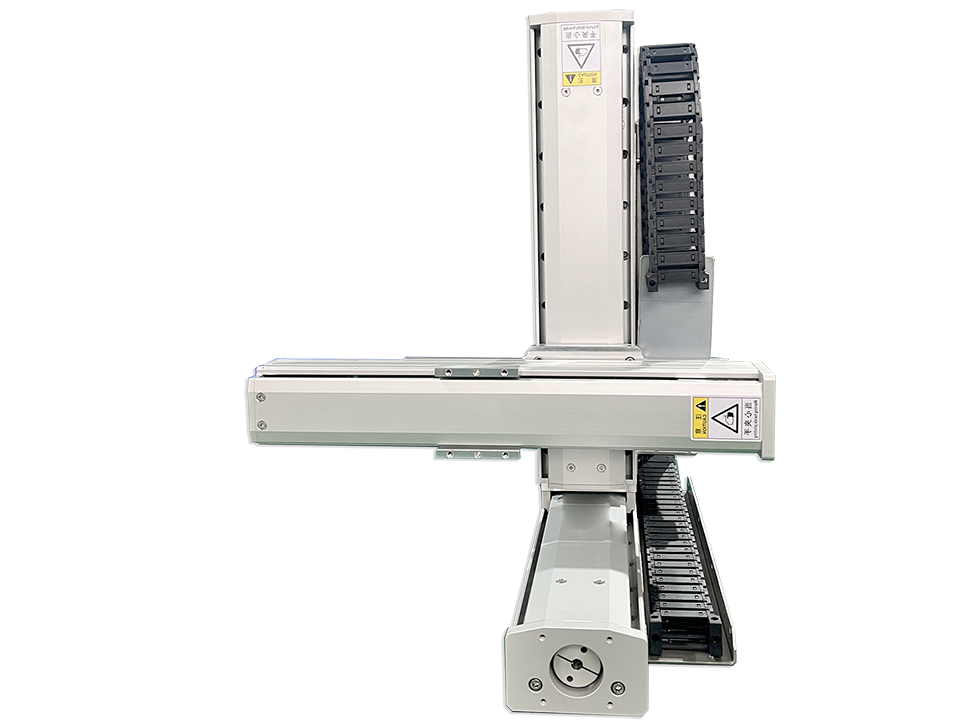
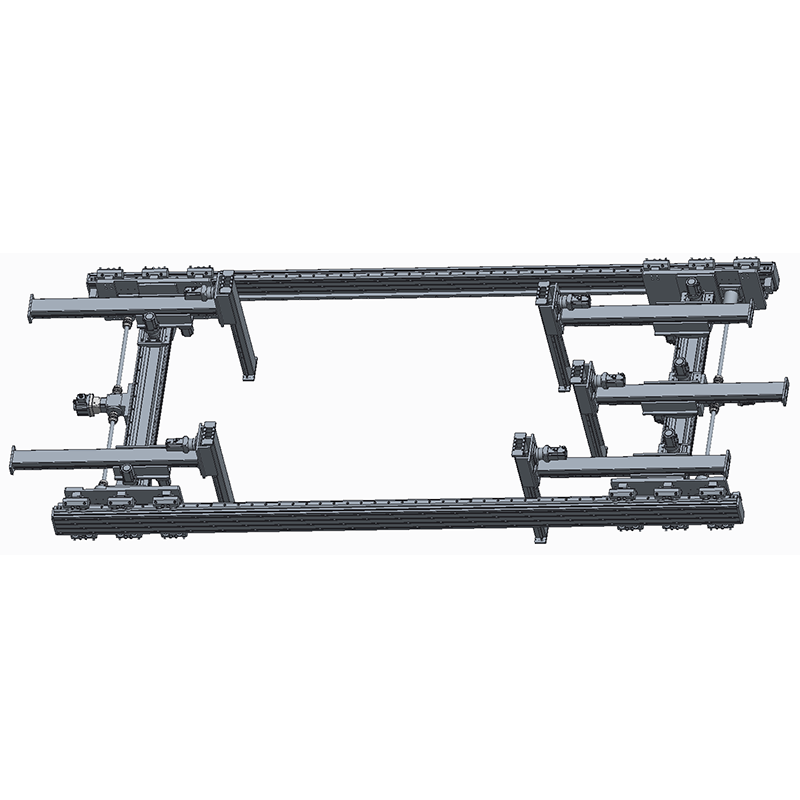
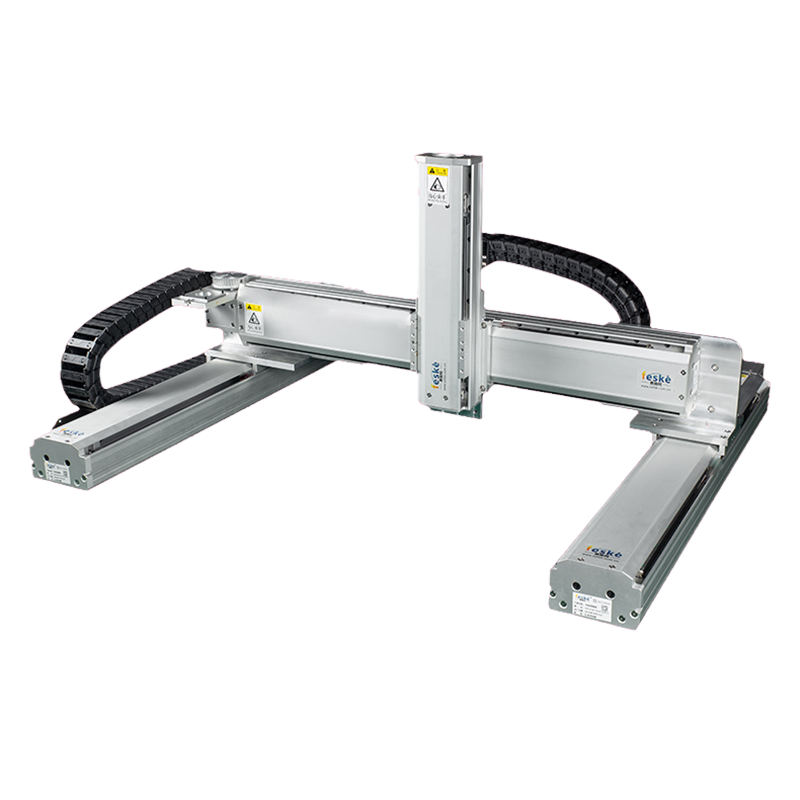
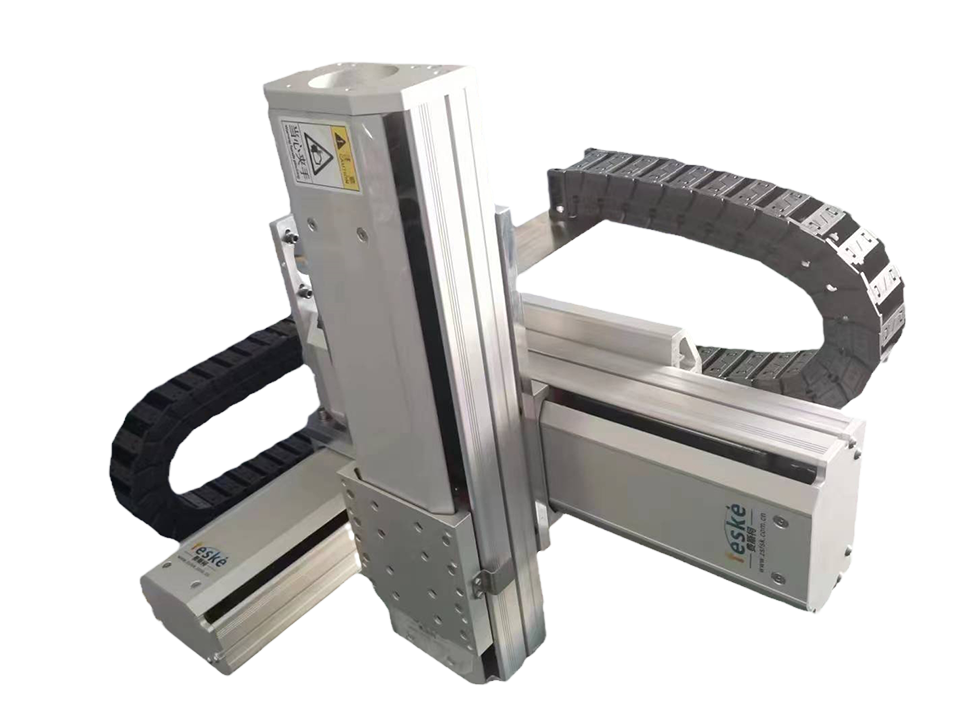
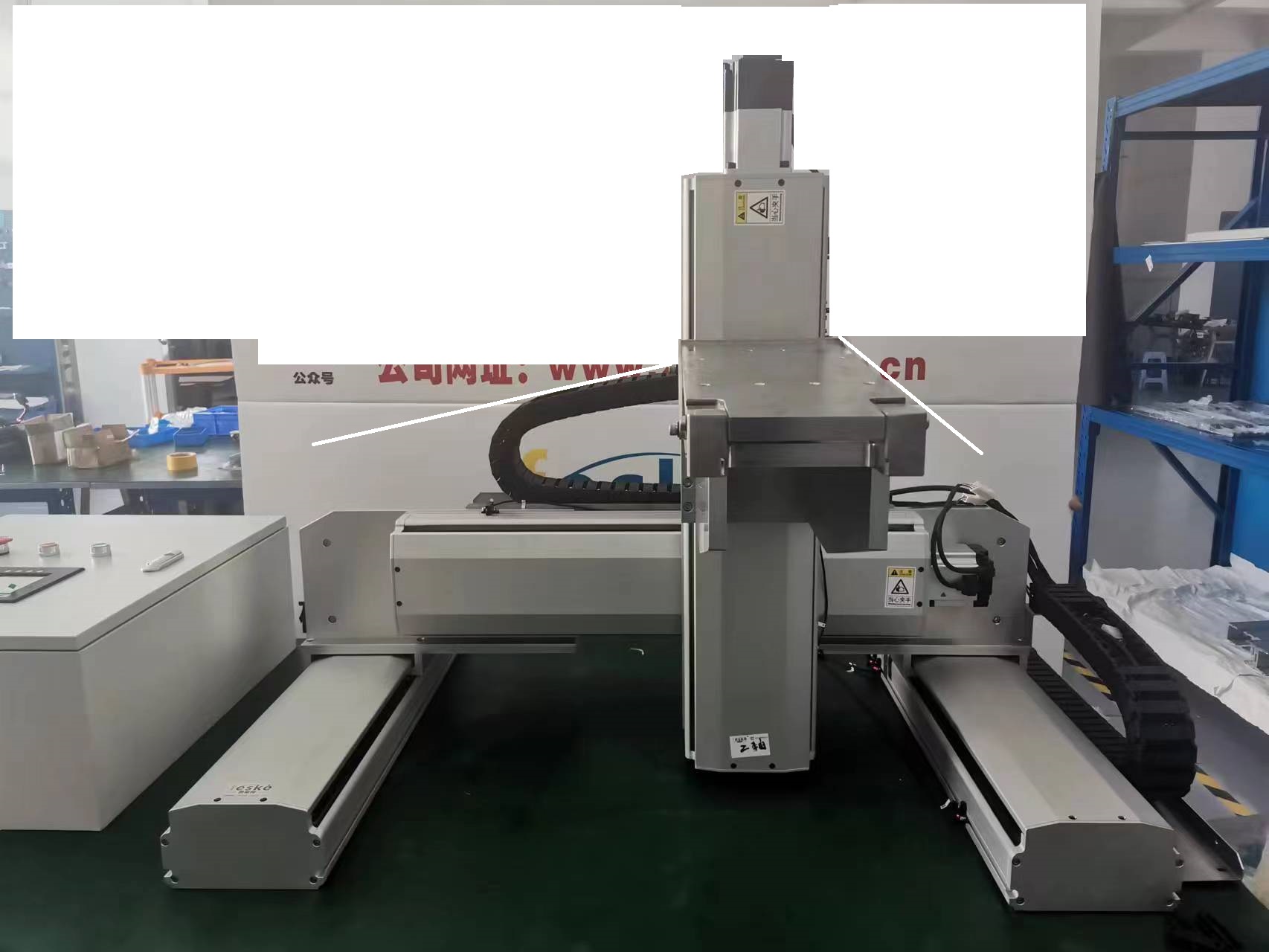
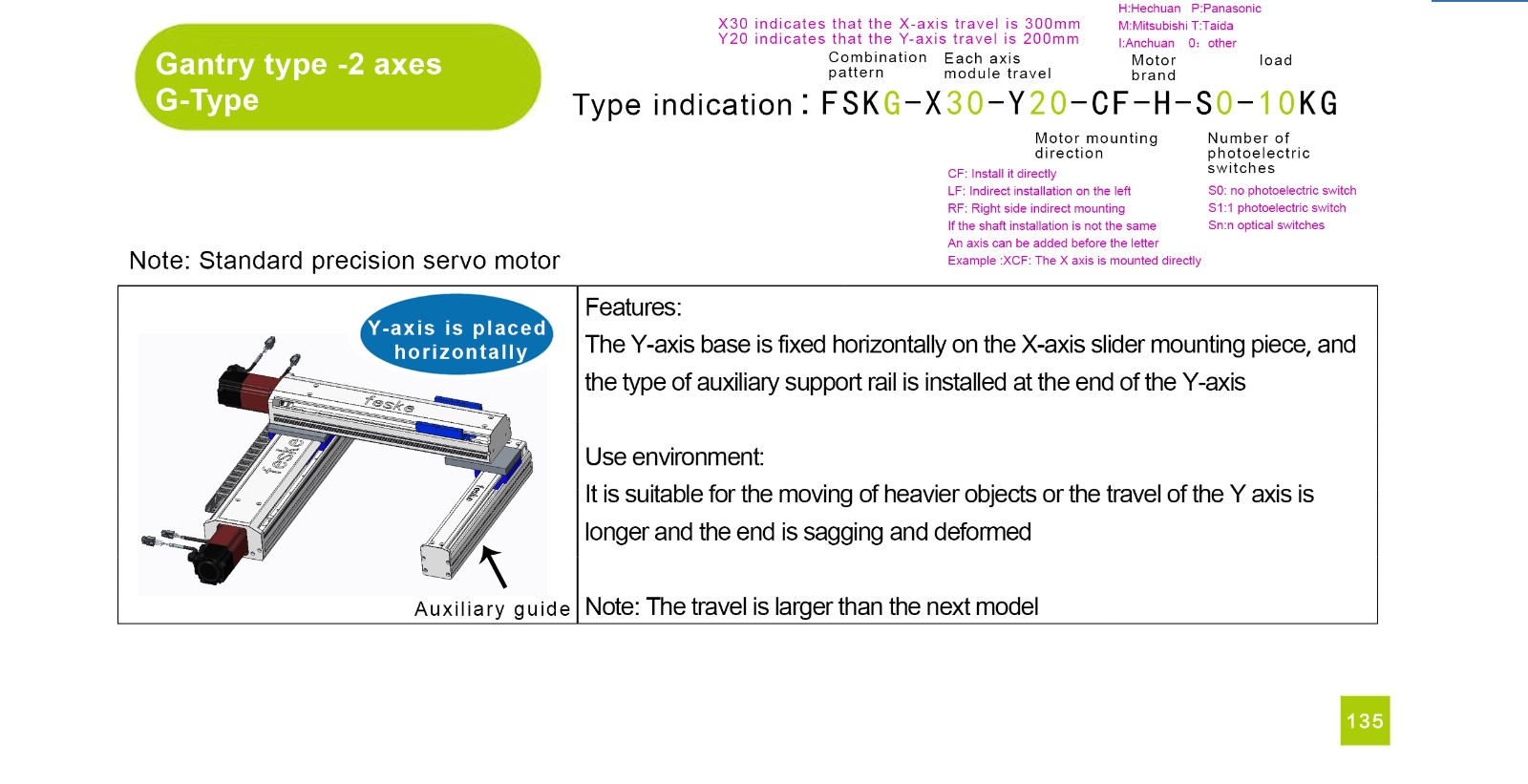
Gantry type - 2 axis G-Type
Y axis horizontal placement
Features: The Y axis base is fixed horizontally on the X axis slider mounting part, and the auxiliary support rail is installed at the end of the Y axis
Use environment: Suitable for the transportation of heavier objects or the Y axis has a long stroke and the end droops and deforms
Note: The stroke is larger than the next model
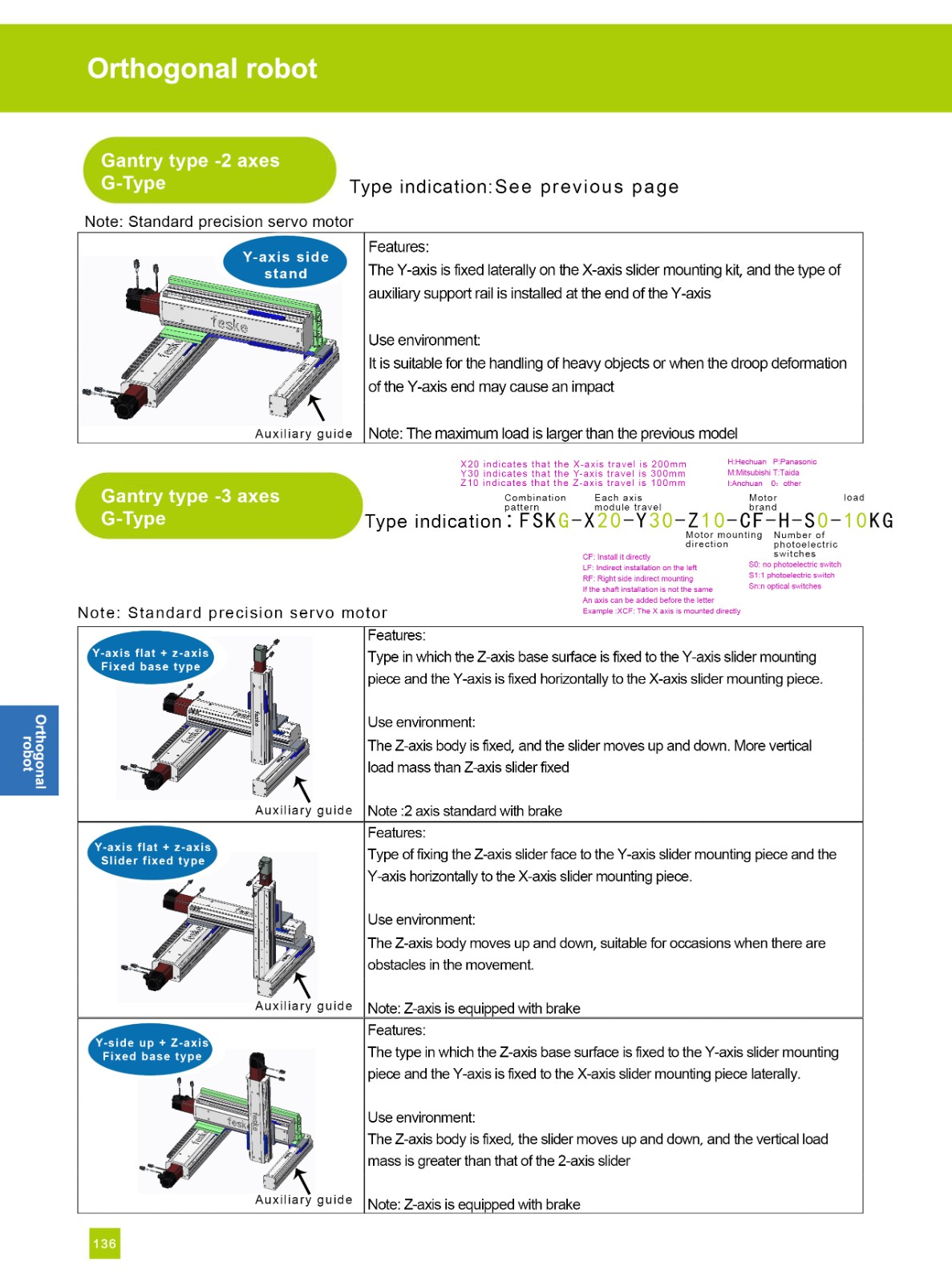
Y axis inverted placement
Features: The Y axis is fixed sideways on the X axis slider mounting part, and the auxiliary support rail is installed at the end of the Y axis
Use environment: Suitable for the transportation of heavier objects or the drooping deformation of the end of the Y axis may cause an impact
Note: The maximum load is larger than the previous model
Gantry type - 3 axis G-Type
Y axis horizontal placement + Z axis base fixed type
Features: The Z axis base surface is fixed on the Y axis slider mounting part, and the Y axis is fixed horizontally on the X axis slider mounting part.
Use environment: The Z axis body is fixed, and the slider moves up and down. Compared with the 2-axis slider fixed type, the vertical load mass is larger
Note: Z-axis comes standard with brake
Y-axis flat + Z-axis slider fixed type
Features: The Z-axis slider surface is fixed to the Y-axis slider mounting part, and the Y-axis is horizontally fixed to the X-axis slider mounting part.
Usage environment: The Z-axis body moves up and down, suitable for occasions where there are obstacles during movement.
Note: Z-axis comes standard with brake
Y-axis side-standing + Z-axis base fixed type
Features: The Z-axis base surface is fixed to the Y-axis slider mounting part, and the Y-axis side-standing is fixed to the X-axis slider mounting part.
Usage environment: The Z-axis body is fixed, the slider moves up and down, and the vertical load mass is larger than the Z-axis slider fixed type
Note: 2-axis comes standard with brake
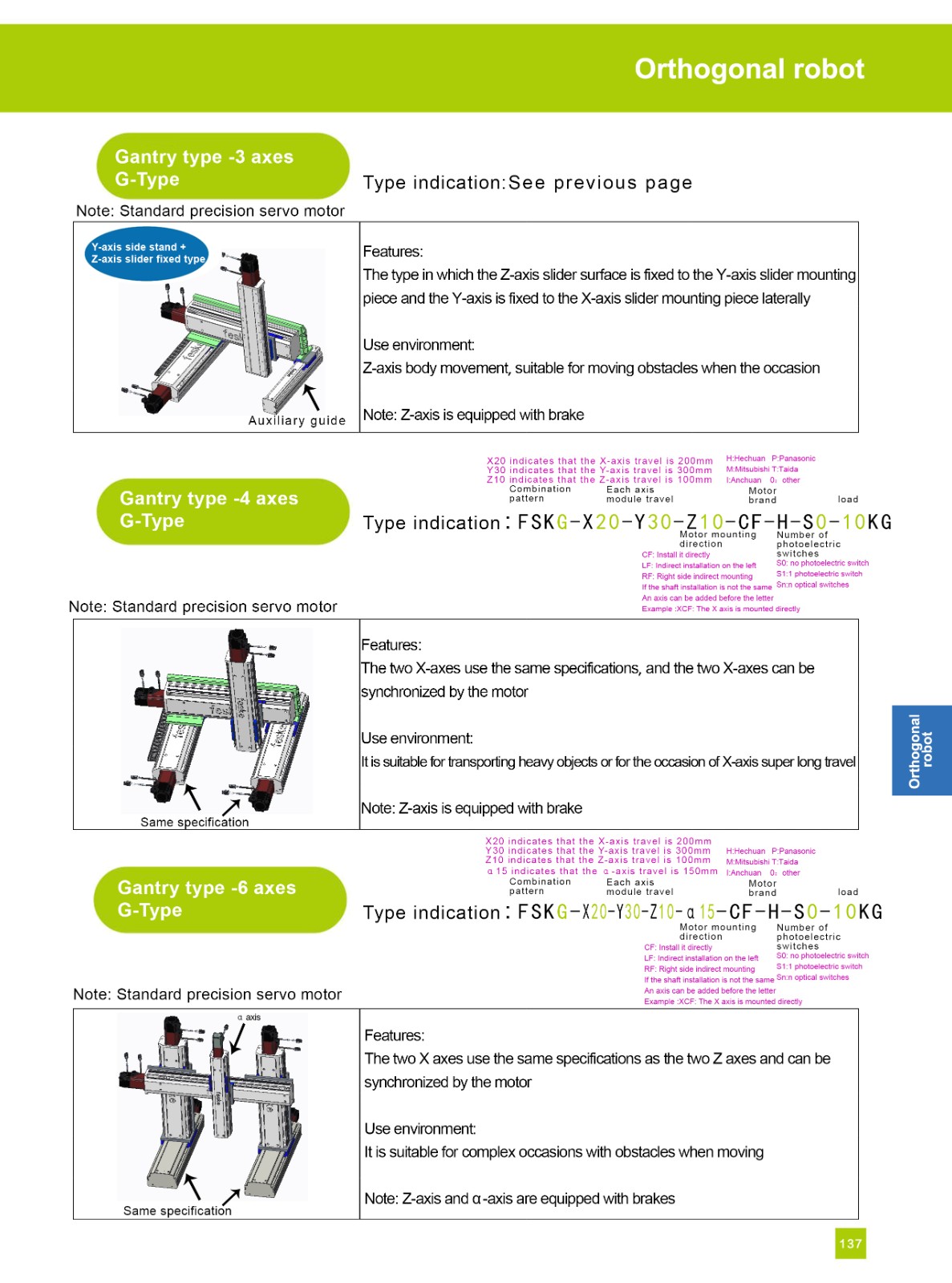
Y-axis side-standing + Z-axis slider fixed type
Features: The Z-axis slider surface is fixed to the Y-axis slider mounting part, and the Y-axis side-standing is fixed to the X-axis slider mounting part.
Use environment: Move on the Z-axis body, suitable for occasions with obstacles during movement
Note: Z-axis comes standard with brake
Gantry type-4 axis G-Type
Features: Two X-axes use the same specifications, and the two X-axes can be synchronized through the motor
Use environment: Suitable for transporting heavier objects or occasions with ultra-long X-axis stroke
Note: Z-axis comes standard with brake
Gantry type-6 axis G-Type
Features: Two X-axes and two Z-axes use the same specifications, and can be synchronized through the motor
Use environment: Suitable for complex occasions with obstacles during movement
Note: Z-axis and a-axis come standard with brake
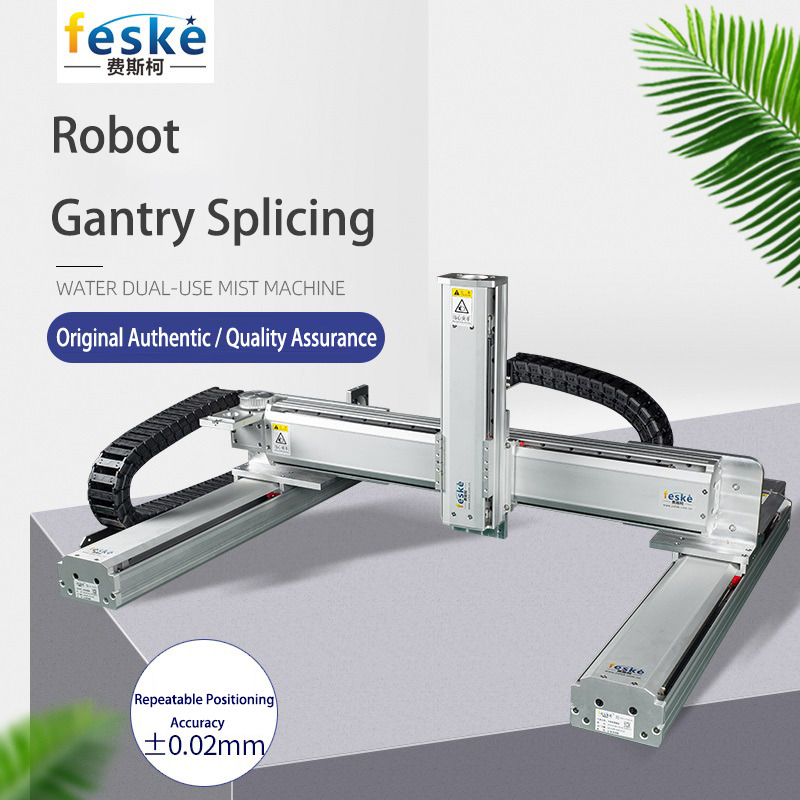
Unlock unparalleled precision and efficiency with our High-precision Multi-axis Orthogonal Gantry Robot Automatic Arm. In demanding industrial environments, where accuracy and speed are paramount, our advanced robot arm solutions redefine automation possibilities.
The high-precision multi-axis orthogonal gantry robot arm is a multi-axis industrial robot based on a
gantry structure, designed using an orthogonal coordinate system, and achieving high-precision motion
control through multi-axis linkage. Its core features include:
* **Multi-axis synchronous control:** Utilizing control structures such as master-slave, coupled, or virt
ual axes, combined with algorithms like PID and sliding mode control, to achieve multi-motor synchroni
zation, ensuring motion accuracy and stability.
* **High-precision performance:** The structure is optimized through finite element analysis, with static
deformation controllable to the micrometer level (e.g., 67.26 μm), and lightweight and high rigidity achi
eved through topology optimization.
* **Application scenarios:** Suitable for precision machining, assembly, inspection, and other application
s, especially in fields requiring high precision and complex trajectory control.
A high-precision multi-axis orthogonal gantry robot automatic arm is an automated execution system
based on a Cartesian coordinate system (XYZ axes) architecture, featuring scalable multi-degree-of-freedom
linkage control. It is widely used in precision handling, assembly, inspection, and processing tasks in indus
trial automation. This type of equipment boasts high rigidity, excellent positioning accuracy, and customiza
ble workspace as its core advantages, making it suitable for high-end manufacturing scenarios with stringe
nt requirements for repeatability, load capacity, and operational stability.
I. Structure and Working Principle This robot is typically supported by a gantry frame structure. The robotic
arm moves along three orthogonal linear axes (X, Y, and Z), forming a large three-dimensional working area.
Its motion unit is based on a servo drive system, achieving efficient conversion from rotation to linear motio
n via ball screws or synchronous belts. Precision guide rails ensure straightness and parallelism during move
ment. Some advanced models can also integrate rotary axes (such as A/B/C axes) to achieve workpiece post
ure adjustment and complete complex trajectory operations.
II. Core Performance Indicators
Positioning Accuracy: Up to ±0.01mm, with repeatability better than ±0.02mm, meeting the micron-level
operation requirements of semiconductor, electronic assembly, and other fields.
Load Capacity: Depending on the model, the effective load ranges from a few kilograms to several tons, suit
able for various working conditions from lightweight precision operations to heavy material handling.
Motion Speed: Supports high-speed reciprocating motion; some models can achieve Z-axis acceleration exc
eeding 2G, significantly improving production cycle time.
Number of Control Axes: Standard 3 axes, expandable to 6 axes or more, supporting multi-axis linkage inter
polation calculations for complex path planning.
III. Typical Application Areas
Electronics and Semiconductor Manufacturing: Used in high-cleanliness, high-precision scenarios such as
wafer handling, chip mounting, and wire bonding.
Automotive Power Battery Assembly: Ensures consistency and safety in module stacking, electrode pressing,
and casing handling.
Vision Inspection and Quality Control: Equipped with a vision system, it automates quality inspection proces
ses such as product appearance defect detection and dimensional measurement.
Laser processing and welding: Works with a laser head to perform precision cutting, marking, or welding op
erations, suitable for multi-faceted processing of irregularly shaped workpieces.
Warehouse and logistics automation: Serves as a stacker crane or sorting robot in automated warehouses,
enabling efficient and precise material scheduling.
Medical and Surgical Robotics
Dual-arm robotic systems have achieved large-scale clinical application in microsurgery and endoscopic procedures, boasting positioning accuracy at the 5-micrometer level. High-end equipment—such as the Da Vinci Surgical System—continues to undergo iterative advancements, driving the evolution of medical robotic arms toward miniaturization and enhanced precision in force feedback.
Modular manipulators are automated systems constructed through the modular assembly of single-axis
robotic modules. Based on the XYZ Cartesian coordinate system, they can be configured to create two-axis,
three-axis, or even multi-axis motion systems, thereby accommodating a diverse range of production requi
rements. Relying on ball screw or synchronous belt drive mechanisms paired with precision linear guides,
these manipulators achieve a repetitive positioning accuracy of up to ±0.02 mm. They feature a design
that combines a lightweight structure with high rigidity, offer convenient assembly and maintenance, and
flexibly execute linear and curvilinear movements for payloads—effectively meeting the high-precision
demands of light-load automation applications. Today, modular manipulators are widely deployed across
sectors such as LCD panels, semiconductors, automotive manufacturing, and battery production. They
execute critical processes—including positioning, material handling, inspection, dispensing, and welding
—serving as indispensable core units within intelligent manufacturing lines and driving the automated and
intelligent upgrading of industrial production.
The accuracy of the slide module directly affects the quality of the product.
Using multi-axis electric cylinders reduces labor costs
Widely used in laser welding, laser cutting, glue coating machines, spraying machines, punching machines, dispensing machines, small CNC machine tools, engraving and milling machines, plotters, cutting machines and other conveyors, sorting equipment, applicable testing equipment, educational equipment, etc.
Establish standardized network marketing services and mature technical service management systems around the world to provide dealers and users with high-quality pre-sales, in-sales and after-sales services. During the warranty period, provide users with fast, timely and efficient free maintenance services; outside the warranty period, users will still receive our enthusiastic and thoughtful paid technical services. We always pursue "zero defects in products and 100% customer service satisfaction".